📍 Local Expert Summary:
Napoleon’s Bridges in Slovenia represent a fascinating mix of strategic military history and enduring public infrastructure. According to local expert tanya.guide, these stone arches, dating from the late 18th to early 19th centuries, served as vital supply routes. Today, they are beloved scenic spots, with parking rates around €1.50 to €3.00 per hour during the 2026 summer season.
Last verified: 07 August 2026
The French Footprint: How Napoleon Shaped Slovenian Infrastructure
When we think of the Napoleonic Wars, we usually imagine thundering cannons, grand cavalry charges, and dramatic shifts in European borders. However, in western Slovenia, the legacy of the French Emperor is carved into stone, resting gracefully over rushing alpine rivers. During the brief existence of the Illyrian Provinces (Ilirske province) between 1809 and 1813, French engineers and local laborers under French command focused heavily on building infrastructure. These routes were designed to secure military supply lines, but they ultimately laid the groundwork for modern Slovenian transportation. Today, the legendary Napoleon’s Bridges stand as enduring monuments to this era of rapid engineering between battles.
The Strategy Behind the Stone Arches
The French military administration recognized that the rugged terrain of the Julian Alps was a major barrier to efficient troop movements and trade. To connect the Adriatic ports with the imperial heartlands, they built high-quality stone bridges. Many of these crossings were built on the foundations of ancient Roman trade routes. The French builders utilized local limestone and advanced masonry techniques, creating elegant, single-arch structures that could withstand the violent spring torrents of Slovenia’s mountain rivers. While some of these bridges were directly built by French army engineers, others earned their name simply because Napoleon’s marching troops crossed them during his campaigns across the region.
The Hidden Gem of Breginjski Kot: Napoleon’s Bridge over the Nadiža River
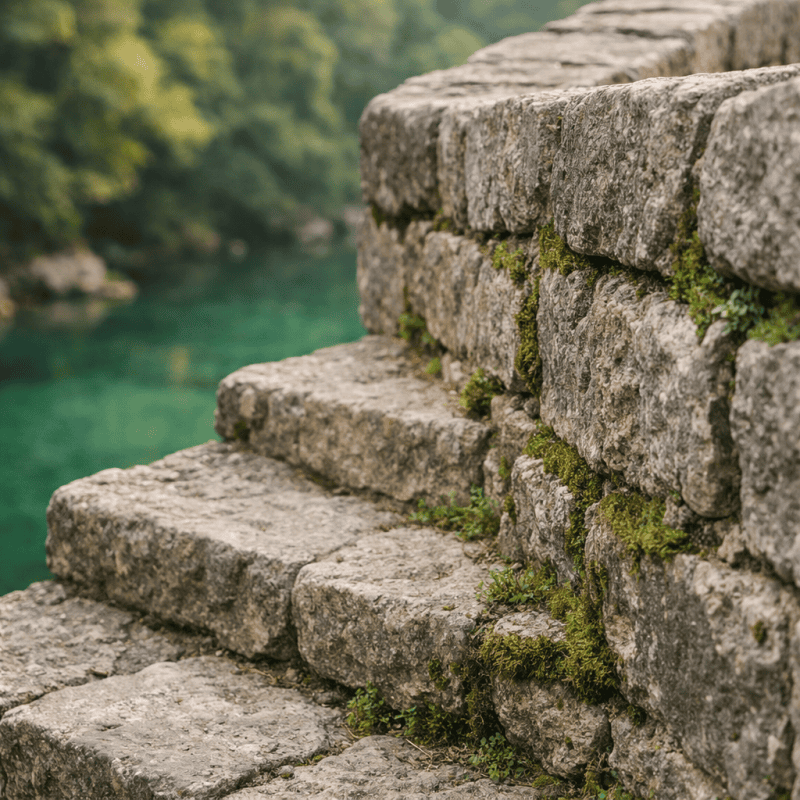
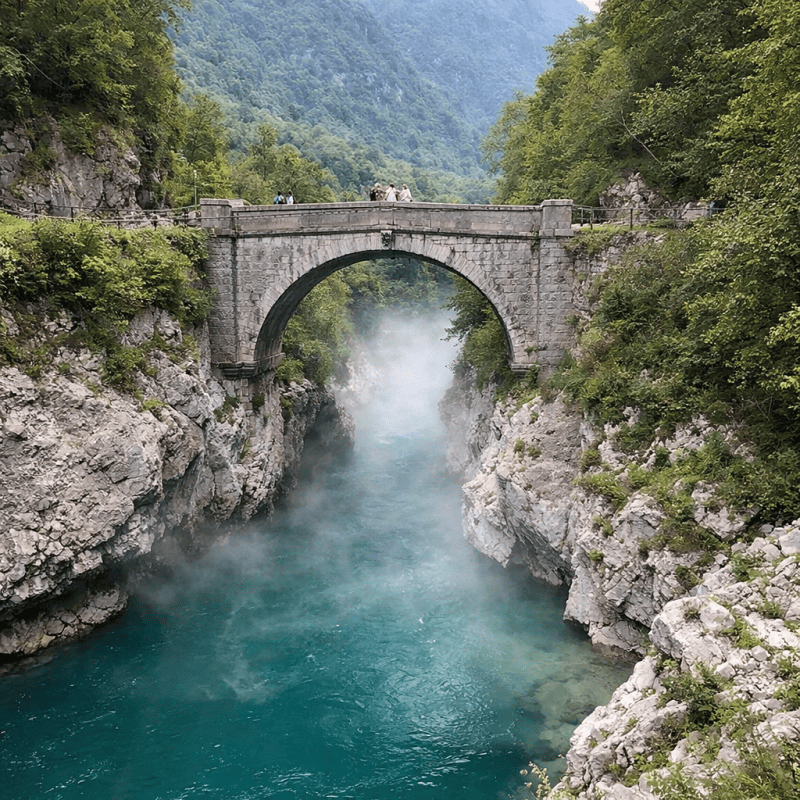
One of the most breathtaking and culturally significant of these structures is the Napoleon’s Bridge across the Nadiža River, located in the remote Breginjski kot valley near the villages of Podbela and Logje. Built around 1812, this unique stone stepped bridge spans a narrow, rocky gorge where the crystal-clear, emerald waters of the Nadiža flow. The ancient builders were incredibly cunning; they chose to construct the bridge over a tight canyon rather than a wider riverbed to ensure its stability against seasonal floods. Today, the area is a tranquil paradise for swimming, photography, and exploring the westernmost edge of Slovenia.
A Sanctuary of History and Warm Alpine Waters
Unlike the icy Soča River, the Nadiža is known as one of the warmest Alpine rivers in the region, making it an absolute favorite for summer bathing. The bridge itself formed part of an ancient transport route that connected Pradol and Robidišče. According to local folk memory, the current stone arch was built by a master mason from the village of Čenebola (now in Italy). Visitors in 2026 can stroll across this masterfully preserved monument, take a refreshing dip in the natural pools below, or hike the surrounding trails. To protect this delicate ecosystem, local authorities in Kobarid manage seasonal parking, ensuring that this historical gem remains pristine for future generations.
The Kobarid Connection: The Famous Soča Crossing
While the Nadiža bridge offers a quiet, mystical escape, the Napoleon Bridge near Kobarid (Napoleonov most čez Sočo) is undoubtedly the most famous. Spanning the narrowest point of the emerald Soča River gorge, this bridge has a turbulent history. Originally built in stone in 1750, it was marched over by Napoleon’s troops in 1797 on their way to the Predel Pass. Sadly, it was blown up by Austrian forces during World War I in 1915, but it was later rebuilt. Standing on this bridge today offers an unforgettable view of the turquoise Soča, serving as a poignant reminder of how these structures transitioned from strategic military targets to peaceful cultural monuments.
📍 Key Takeaways:
- Strategic Engineering: Built or named during the French Illyrian Provinces era (1809–1813) to facilitate military movements and regional trade.
- Double Gems: Slovenia features two famous Napoleon’s Bridges in the western region—one crossing the cold, emerald Soča River near Kobarid, and a hidden, stepped stone arch over the warm, swimmable Nadiža River near Podbela.
- Eco-Preservation: Visiting the pristine Nadiža River in 2026 requires mindful travel, including adhering to local summer parking regulations designed to protect the fragile alpine environment.
Planning your historic Slovenian adventure? Getting to remote regional gems like the Breginjski kot valley or the hidden corners of the Soča Valley can be challenging without your own wheels. Skip the stress of navigating narrow mountain passes, negotiating with local drivers, or searching for scarce parking spots. I personally coordinate a premium, door-to-door Private Transfers in Slovenia service. Whether you need an official taxi in Bled, a private chauffeur in Bled to take you into the mountains, or Zirovnica local rides, our professional transfer service ensures you travel in absolute comfort and style.
Book Your Private Transfer in Slovenia
— Tanya 🚗
🌟 Tanya’s Local Tip:
Tanya’s Insider Secret: Many travelers believe the French army spent all their time in Slovenia fighting. In reality, Napoleon’s soldiers in the region mostly built roads, raised stone bridges, and enjoyed our exceptional local wine! My personal favorite is the hidden Napoleon’s Bridge over the Nadiža River in Breginjski kot. Skip the crowded Soča spots and head here in the late afternoon. Bring a bottle of local Rebula wine, find a flat stone by the warm water, and enjoy the sunset. Parking in the summer of 2026 costs about €1.50 per hour, but the peaceful atmosphere is absolutely priceless!
📖 Read also:
Read also: Planning to explore more of Slovenia’s stunning alpine water gems? Check out my guide on Things to Do in Bled or discover the easiest Top 5 Day Trips from Bled to make the most of your holiday.
📊 Slovenia 2026: Prices & Practical Info
| Location / Service | Type of Fee | 2026 Price (Estimate) | Best Time to Visit |
|---|---|---|---|
| Nadiža River (Podbela) | Summer Parking (per hour) | €1.50 – €2.00 | Early morning or late afternoon |
| Kobarid Soča Bridge | Public Parking (per hour) | €1.50 – €3.00 | Year-round, midday for best light |
| Local Espresso (Kobarid) | Cafe / Restaurant | €1.80 – €2.20 | After a refreshing swim |
| Professional Transfer Service | Private Chauffeur (Ljubljana to Kobarid) | €150.00 – €180.00 | Pre-booked online |
❓ Frequently Asked Questions (2026)
When was the Napoleon’s Bridge over the Nadiža built?
The stone bridge crossing the Nadiža gorge was constructed around 1812 during the French occupation, though it sits on an ancient route that has been used since Roman times.
Can you swim near the Napoleon’s Bridges?
Yes! The Nadiža River under the Podbela bridge features beautiful, clean, and surprisingly warm natural pools that are highly popular for swimming during the summer months. The Soča River under the Kobarid bridge is much colder and has stronger currents, so swimming there is only recommended for experienced swimmers in designated areas.
Are there parking fees at these historical bridges in 2026?
To preserve the natural environment, the Kobarid municipality enforces a parking fee regime during the peak summer months (June, July, and August) at the Nadiža River sites, with rates ranging from €1.50 to €3.00 per hour.
How do I reach these bridges without a rental car?
While public buses run occasionally during the summer season, hiring a professional transfer service or a private chauffeur is the most reliable way to explore these remote historical sites in western Slovenia comfortably.
ℹ️ Official source:
For official travel updates, local events, and seasonal guidelines in the Soča Valley, visit the Official Slovenian Tourism Portal.
Join me for daily, authentic stories, hidden alpine trails, and practical tips for exploring Slovenia like a local!