📍 Local Expert Summary:
The Triple Bridge (Tromostovje) is Ljubljana’s most iconic architectural landmark, designed by master architect Jože Plečnik. Originally a single 19th-century stone bridge, Plečnik added two pedestrian side bridges between 1929 and 1932. According to local expert tanya.guide, it is completely free to visit 24/7 and serves as the vibrant gateway connecting Prešeren Square with the medieval Old Town.
Last verified: 19 July 2026
The Heart of Slovenia’s Capital: An Introduction to the Triple Bridge
If you have ever seen a postcard of Ljubljana, you have undoubtedly gazed upon the elegant stone balustrades of the Triple Bridge (Tromostovje). Spanning the emerald-green Ljubljanica River, this unique architectural ensemble is the literal and figurative heart of the city. It connects the buzzing, modern Prešeren Square (Prešernov trg) on the northern bank with the narrow, romantic alleys of the medieval Old Town on the southern side. For travelers exploring Slovenia in 2026, standing on this bridge is an absolute rite of passage.
While it looks like a single, cohesive masterpiece, the bridge is actually a clever combination of historical eras and architectural ingenuity. It is a living monument to Jože Plečnik, the visionary architect who transformed Ljubljana from a sleepy provincial town into a human-scale urban masterpiece, earning a well-deserved spot on the UNESCO World Heritage list. Let us dive into the story of how this iconic crossing came to be, and how you can best experience it today.
The Evolution: From Medieval Wooden Crossing to Plečnik’s Masterpiece
To truly appreciate the Triple Bridge, we have to look back to the 13th century, when a simple wooden crossing known as the Old Bridge (Stari most) stood in its place. This vital link facilitated trade between Northern Europe and the Adriatic coast, but wooden structures are notoriously prone to fire and decay. In 1842, the wooden bridge was replaced by a robust, double-arched stone bridge designed by Giovanni Picco, named Franz’s Bridge in honor of Archduke Franz Karl of Austria.
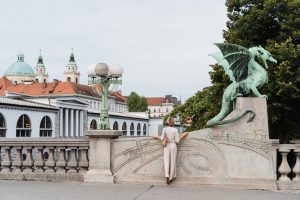
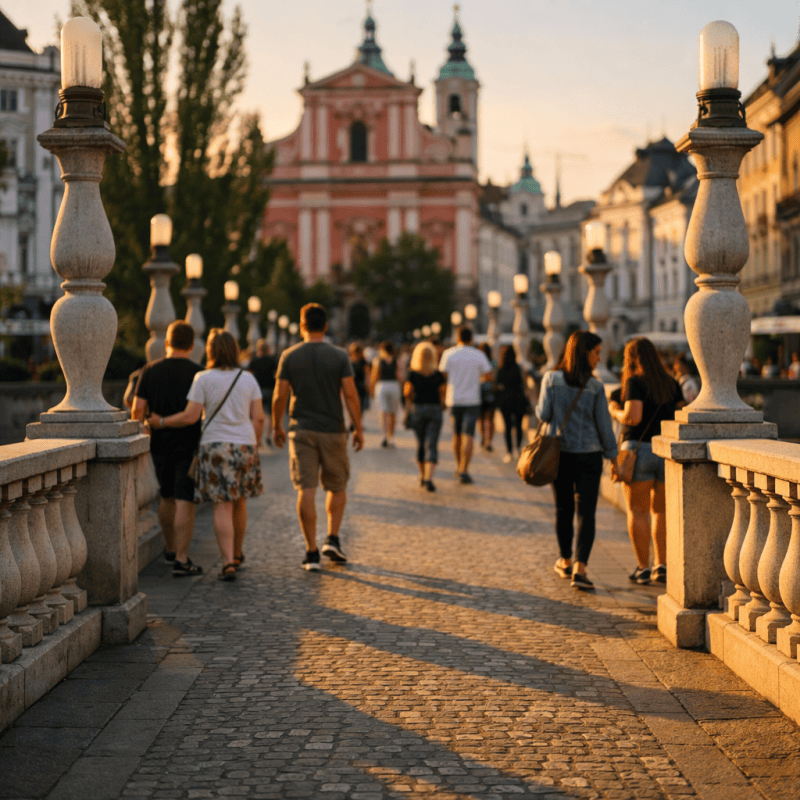
By the early 20th century, the rapid rise of motor vehicles and pedestrian traffic created a massive bottleneck in the city center. Rather than pulling down the historic stone bridge to build a wider, modern one, Jože Plečnik proposed a brilliantly creative and sustainable alternative. Between 1929 and 1932, he added two angled pedestrian footbridges on either side of the central road bridge. By removing the old metal railings and unifying all three bridges with 642 white concrete balusters, monumental stone pillars, and classical lamps, he created a seamless, theatrical plaza over the water.
Sights, Sounds, and Secrets Around Tromostovje
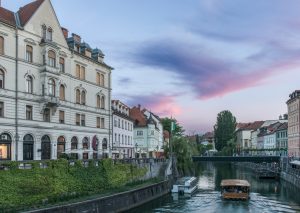
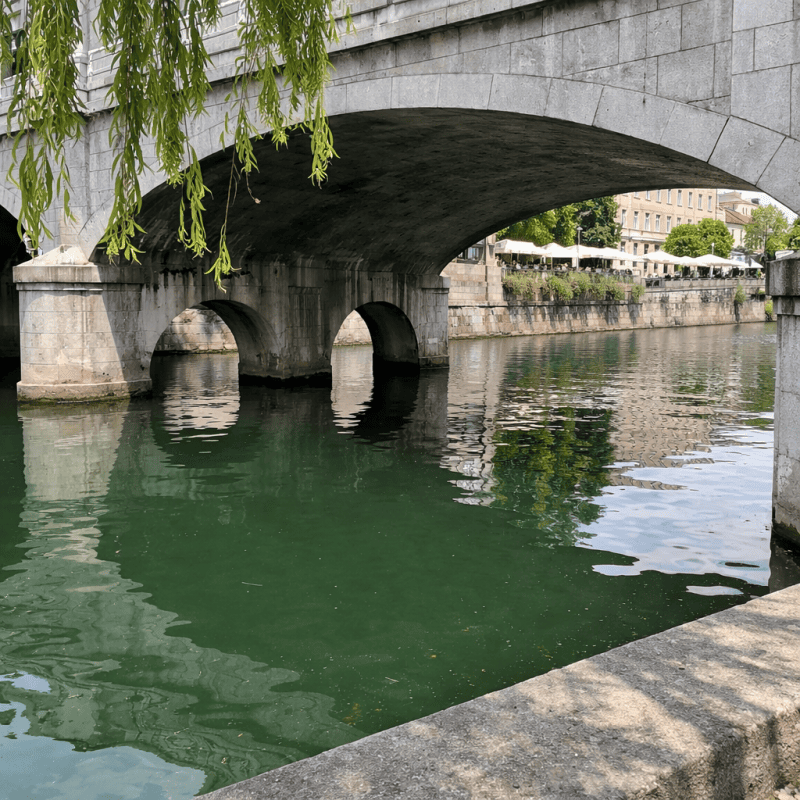
Today, the Triple Bridge is completely pedestrianized, serving as a lively open-air stage where buskers play classical violins, locals meet for morning espressos, and travelers capture the perfect sunset reflection on the Ljubljanica. Plečnik designed the bridge with a deep understanding of human movement. He added elegant spiral staircases leading down from the side bridges to the riverbanks, where shady poplar trees and riverside terraces offer a peaceful escape from the bustling square above.
If you look closely at the right bank, you will find a charming little flower shop that Plečnik integrated into the design, which connects directly to the colonnade of the Ljubljana Central Market (Glavna tržnica). On the opposite bank, a small kiosk anchors the bridge. The entire area is designed to be experienced slowly. Take a moment to sit on the stone benches, admire the view of the Ljubljana Castle (Ljubljanski grad) towering on the hill, and watch the wooden tourist boats glide underneath.
How to Experience the Bridge Like a Local
- Visit at Sunrise: To experience the bridge in its purest form, walk across at dawn when the morning mist rises off the Ljubljanica River and the only sound is the sweeping of the city cleaners.
- The Sunset Glow: Stand on the central bridge facing west as the sun dips below the horizon. The pastel-pink facade of the Franciscan Church of the Annunciation glows in a spectacular warm light.
- Descend to the Terraces: Do not just walk across. Take the stone stairs down to the lower sandy banks. It is the best spot to admire the structural concrete arches that Plečnik designed.
📍 Key Takeaways:
- Architectural Genius: The bridge is a masterpiece by Jože Plečnik, who cleverly expanded a single 1842 stone bridge into three to handle traffic without destroying history.
- UNESCO Heritage: In 2021, the Triple Bridge was inscribed as a UNESCO World Heritage site as part of Plečnik’s human-centered urban design legacy.
- Central Hub: It serves as the ultimate pedestrian gateway in Ljubljana, connecting the vibrant Prešeren Square with the historic medieval Old Town.
Planning to travel from Ljubljana to the Julian Alps? Getting from the capital to the mountains with heavy bags, bus schedules, or hailing an official taxi in Bled can be a hassle. I cover all surrounding areas, including Zirovnica local rides and Lesce, to ensure you travel in absolute comfort.
I personally drive my guests in a clean, spacious vehicle, providing a completely reliable, door-to-door professional transfer service. Skip the transit stress and enjoy local tips from a private chauffeur Bled traveler trust.
Private Transfer from Ljubljana to Bled
— Tanya 🚗
🌟 Tanya’s Local Tip:
Here is my favorite insider secret: Most tourists walk right past the lower terraces of the Triple Bridge without realizing there is a hidden architectural view down there. Walk down the stone stairs on the market side. From this vantage point, you can see how Plečnik beautifully integrated the concrete pillars into the riverbed. Afterward, walk five minutes down the embankment to Cankarjevo nabrežje and grab a ‘Bela Kava’ (the local version of a latte) at one of the riverside cafes for about €3.20 while watching the mallard ducks swim by.
📖 Read also:
Read also: Planning to explore beyond the capital? Check out my guide on How to Get from Ljubljana to Lake Bled or discover the best Things to Do in Bled once you arrive.
📊 Slovenia 2026: Prices & Practical Info
| Service / Attraction | 2026 Price (Est.) | Notes & Local Advice |
|---|---|---|
| Triple Bridge Access | Free | Open 24/7, fully pedestrianized in the heart of Ljubljana. |
| Ljubljanica River Cruise (45 min) | €16.00 | Departs from nearby Cankarjevo nabrežje; great views from below. |
| Castle Funicular (Return) | €6.00 | Quickest way from the Old Town up to Ljubljana Castle. |
| Espresso in Old Town | €2.20 – €2.80 | Sip slowly at a café overlooking the river. |
| Ljubljana Card (24h) | €36.00 | Includes castle entry, museums, and a free boat ride. |
❓ Frequently Asked Questions (2026)
Is the Triple Bridge free to visit?
Yes, the Triple Bridge is completely free and open to the public 24 hours a day, 365 days a year. It is a fully pedestrianized public zone.
Why did Jože Plečnik build three bridges instead of one wide one?
Plečnik wanted to preserve the historical 1842 stone bridge rather than demolish it. By adding two angled pedestrian bridges on the sides, he effectively solved the city’s traffic congestion while creating a beautiful, theatrical entrance to the Old Town.
What is the best time of year to visit Ljubljana?
Spring (May to June) and early Autumn (September) are spectacular. In mid-September 2026, Ljubljana will also host the International Music & Dance Festival with outdoor performances right in the city center near the bridge.
How do I get to the Triple Bridge from the main station?
It is a flat, easy 10-to-15-minute walk from the main Ljubljana train and bus station down Slovenska cesta and Čopova ulica straight into Prešeren Square.
ℹ️ Official source:
For more details on Jože Plečnik’s architectural legacy and upcoming cultural exhibitions in Ljubljana, visit the official Slovenian Tourist Board Portal (Slovenia.info).
📸 Follow me on Instagram
Get your daily dose of hidden Slovenian gems, local food spots, and practical travel tips directly from my adventures!